
The Things We Keep
By Christa Meland
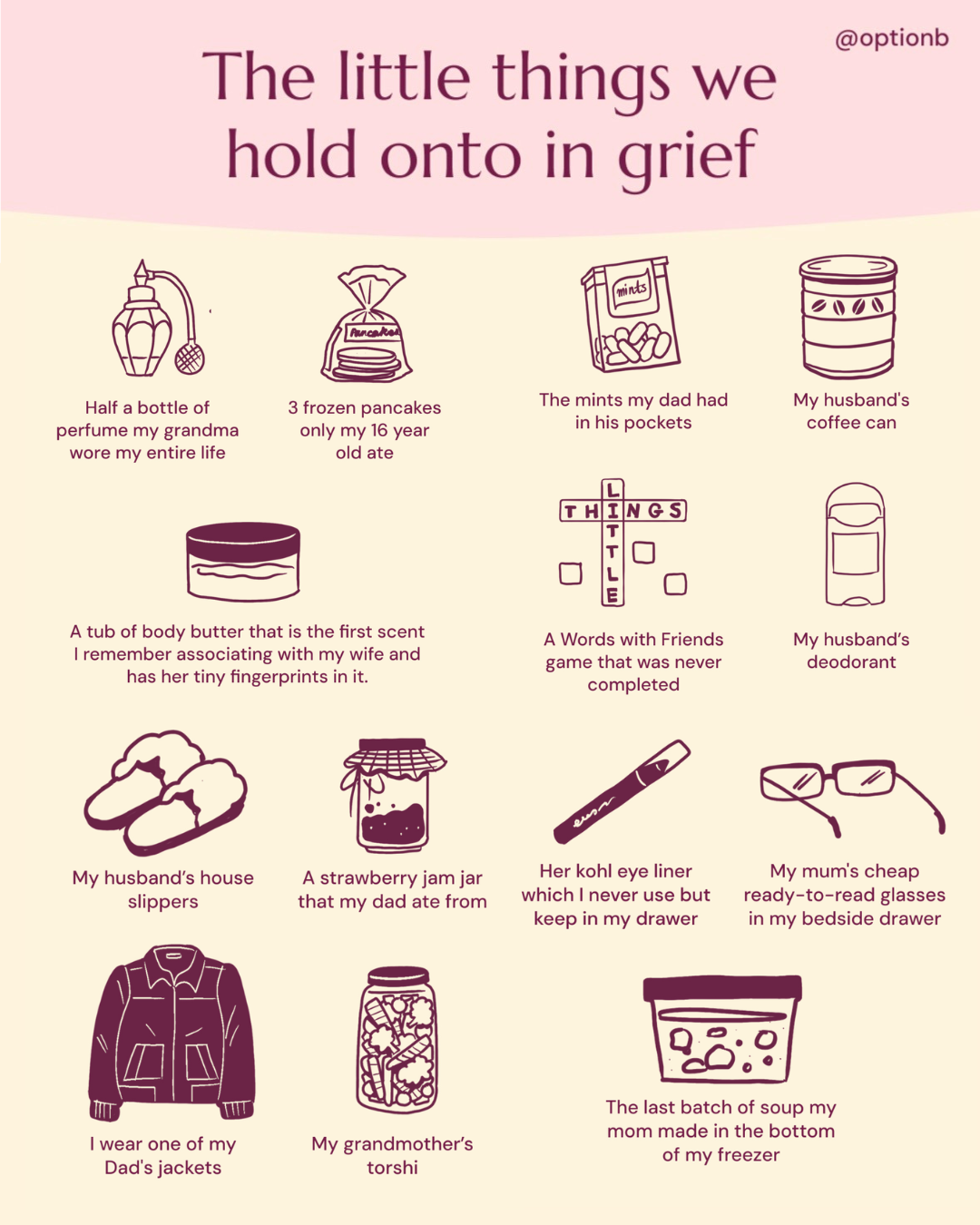
This is the image we shared along with our question that prompted dozens of responses: What have you held onto to remind you of a departed loved one?
A half-used bottle of Old Spice. A favorite jacket. A crossword left unfinished. A canceled check with a familiar signature.
To anyone else, these objects might seem ordinary. But to someone who is grieving, they can become priceless.
Recently, we asked our social media community a simple question after sharing an illustration about the keepsakes people hold onto after a loved one dies: What have you held onto to remind you of someone you've lost?
The responses poured in, revealing a beautiful truth: Grief has a way of transforming everyday objects into vessels of memory.
Many people wrote about clothing. One woman still wears her husband's pajama pants every night, four years after his death. Another described her father's Mickey Mouse jean jacket, saying, "The jacket feels like a hug." Others mentioned a mother's dressing gown, a father's winter coat, or a flannel shirt that still carries a familiar scent.
Smell, especially, has a remarkable ability to reconnect us with those we love. Several people shared that they still keep a bottle of perfume, Old Spice aftershave, or a reed diffuser simply because the fragrance brings their loved one rushing back.
Others held onto objects that captured everyday routines: a vinegar decanter that reminded someone of her dad's fish suppers, a crystal salt dish her sister used to take medication—now used for her own pills—or a purse, ChapStick, tools in the garage, a daughter’s container of Tic Tacs, and the last book a mother was reading.
Some of the most moving responses centered on unfinished moments: a crossword puzzle partially completed by Mum, knitting needles resting in a project never finished, a voicemail saved to hear a beloved voice, or a phone number that simply can't be deleted. One woman treasures the last time her father signed his name—a canceled check she happened to find after he died.
For those whose loss was more recent, the objects felt even more immediate. One woman, whose husband had died just two weeks earlier, couldn't bear to move his half-eaten candy bar, gummy worms, or cup of water from his desk. Another, also grieving a recent loss, listed her father's work shirt, glasses, wallet, and bottle of Old Spice before admitting, "I'm still in disbelief."
There is no right timeline for packing away belongings or deciding what to keep. These choices are deeply personal, and they often evolve over time.
The things we hold onto aren't really about the objects themselves. They're about the love they represent. A favorite sweater, a hairbrush, a jar of jam, or a pair of glasses may seem insignificant to everyone else, but to the person grieving, they tell a story.
Sometimes healing isn't about letting go.
Sometimes it's about recognizing that love continues to live on in the smallest, most ordinary things.
